
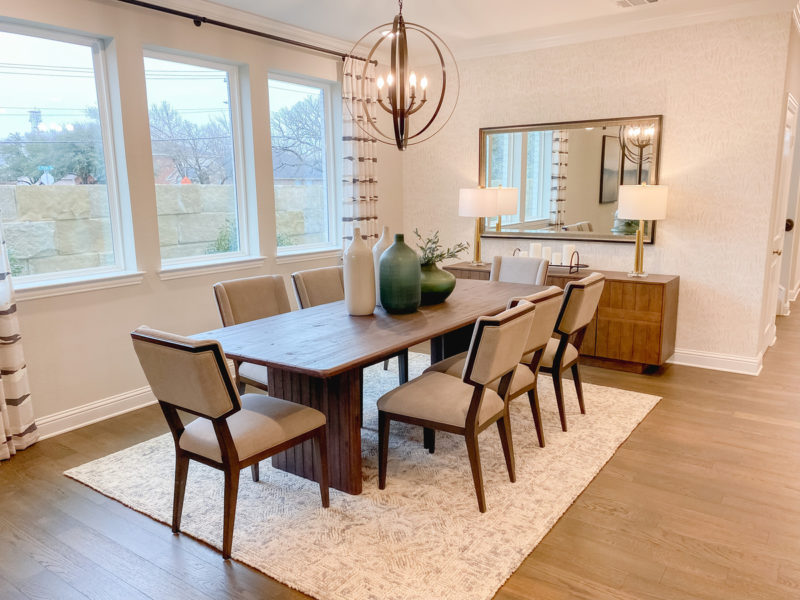
Overview

A space dedicated to shared meals is a recurring feature in many types of housing, from small urban apartments to large detached houses and villas. In some dwellings it takes the form of a clearly separate room, often associated with formal occasions and guest hospitality; in others it appears as an area set aside within a more flexible plan. The way in which this space is defined, furnished and connected to other rooms influences daily routines, social interaction and perceptions of comfort.

In residential property markets, particularly those involving second homes, expatriate buyers and investors, dining rooms and equivalent areas are assessed alongside other principal spaces such as kitchens, living rooms and bedrooms. Their configuration and quality contribute to judgments about plan efficiency, lifestyle suitability and the potential of a property for gatherings, events and short-term rental.

What spatial characteristics define a dining room?

Spatially, a dining room is characterised by its capacity to accommodate a table of appropriate size, seating for the intended number of users and sufficient circulation room to permit entry, exit and serving without congestion. It is often located close to the kitchen for practicality but may also be aligned with external spaces such as terraces or gardens. The room’s dimensions, proportions, window placement and door positions condition how furniture can be arranged and how people move through the space.

Historical and cultural background

How did specialised rooms for meals emerge?

In many pre-industrial societies, domestic activities took place in multi-purpose spaces where sleeping, working and eating occurred in different zones of a single room or a small number of rooms. As dwellings in some cultures became larger and more differentiated, the division of space into specialised rooms reflected both functional needs and social hierarchies. In European contexts, for example, separate dining rooms began to appear in substantial houses in the early modern period, often located near but not immediately adjacent to kitchens. Meals were served formally, sometimes by staff, and the room became a setting for display of tableware, furnishings and hospitality.

In other cultural traditions, analogous spaces developed with different configurations and degrees of separation from cooking areas. In some East Asian houses, for instance, the same room might be used for both eating and other activities, with furniture that could be rearranged or stowed away. In parts of the Middle East, spaces used for receiving guests and serving food often occupied prominent positions near entrances, reflecting the importance of hospitality.

Why have dining rooms changed over time?

Several forces have contributed to the transformation of dining rooms. Urbanisation and the rise of smaller dwellings reduced the prevalence of large sets of reception rooms. Domestic labour patterns shifted, with fewer households employing staff and more members participating in both preparation and sharing of meals. Technological developments in ventilation, heating and lighting allowed cooking and eating functions to be brought closer together without causing discomfort.

Social attitudes also changed, with a greater emphasis in many societies on informal family interaction rather than strictly segregated formal occasions. This led to widespread adoption of kitchen–diner and open-plan arrangements, especially in new housing built from the mid-twentieth century onwards. However, separate rooms persisted in certain cultural contexts and in higher-end properties where formal entertaining remained valued.

How do cultural practices shape dining-room norms?

Cultural practices around food—what is eaten, who prepares it, how meals are structured and who is hosted—strongly influence expectations for dining spaces. Societies that place high importance on large family gatherings, extended hospitality or ceremonial meals often expect generous table sizes and greater seating capacity, along with room for circulation and serving. In such contexts, a separate room may be considered desirable or even essential.

Other cultures may favour more casual patterns, such as meals eaten in the kitchen or living room, which reduces the requirement for a formal room. The diversity of customs globally has generated a wide range of spatial solutions, from low tables and floor seating to integrated counters and bar stools, all of which influence what is understood by “dining room” in a particular market.

Functions and configurations

What functions do dining rooms fulfil?

The primary function of a dining room is to provide a setting in which occupants can eat meals together. It offers a stable arrangement of furniture that supports sitting, placing dishes and sharing food. Beyond this core purpose, many dining rooms serve additional roles. They may act as a focal point for family communication, a venue for celebrations and a setting in which guests are received. In contemporary life, tables are frequently pressed into service for activities such as homework, craft work and remote work, particularly where space is at a premium.

The degree to which such additional uses occur depends on the size of the room, the availability of other spaces, and household routines. In larger houses with studies or home offices, the dining room may be kept primarily for meals, whereas in smaller apartments it may function as an all-purpose horizontal work surface.

How are common configurations differentiated?

Configurations can be grouped into several broad types:

  • Separate dining room: An enclosed or largely enclosed room, sometimes with doors, which may be used daily or reserved for special occasions.
  • Combined living–dining room: A larger room in which one zone is furnished for eating and another for seating, often demarcated by rugs, furniture groupings or lighting.
  • Kitchen–diner: A space in which cooking facilities and the dining table share the same room or directly connected zone, with islands, peninsulas or partial partitions providing some separation.
  • Breakfast area or nook: A smaller dedicated area, often near a window, used mainly for casual meals or snacks.

Each configuration reflects trade-offs between formality, efficiency of space use, separation of functions and social interaction. Combined spaces can support supervision of children and shared activities but may offer less acoustic separation; separate rooms can provide quieter, more controlled environments at the cost of requiring more floor area.

Why do households and developers favour particular configurations?

Households select configurations based on lifestyle, household composition, budget and available housing stock. Those who entertain frequently may prefer larger, more formal spaces, while those who cook and eat informally may value open-plan arrangements that integrate cooking and dining. Developers, architects and interior designers respond both to expressed preferences and to constraints imposed by building footprints, structural systems and market positioning.

In international property markets, projects aimed at specific buyer groups may emphasise particular configurations. For example, resort developments aimed at families may highlight open-plan kitchen–diner–living spaces with direct access to terraces, while urban apartments aimed at executives may emphasise compact yet well-proportioned combined spaces.

Spatial relationships within the dwelling

How are dining rooms related to kitchens, living rooms and circulation routes?

In most dwellings, the dining room or equivalent area is located close to the kitchen, reflecting the need to move food and tableware efficiently. The distance between kitchen and table, the presence of intermediate doors or changes in level and the alignment of circulation routes all affect practicality. In some layouts, the dining room functions as a transitional space between kitchen and living room, while in others it is situated to one side, with independent access.

Circulation routes to bedrooms, bathrooms and external doors also intersect with dining spaces. A plan that requires occupants to pass through the eating area to reach other rooms may be perceived as less efficient, especially when the table is in use. Conversely, a plan that allows service and movement around the table without disturbance contributes to comfort during meals and gatherings.

How does spatial hierarchy influence dining-room placement?

Spatial hierarchy refers to the ordering of spaces from public to private, formal to informal. In many traditional houses, dining rooms occupy positions within the semi-public or semi-private zone, accessible from the entrance hall but somewhat separated from the most private bedrooms. In compact modern dwellings, this hierarchy is often compressed, with the dining area forming part of a single multi-functional space that also serves as the main living zone.

In some cultures, dining rooms closer to the entrance may serve guests, while family meals occur elsewhere; in others, the same room is used for both. These differing hierarchies influence how eating spaces are accessed and perceived.

Architectural and interior design characteristics

What architectural factors govern dining-room design?

Architectural factors include room dimensions, ceiling height, window and door placement and the location of structural elements. A room that is too narrow relative to its length may limit table arrangements, while an unusually low ceiling can affect perception of volume. Window positions determine where natural light enters and where views can be directed. Doors to halls, kitchens, living rooms or terraces influence circulation and furniture placement.

In multi-unit residential buildings, column grids and service risers may limit how rooms can be arranged. In houses on sloping sites, split-level arrangements may position dining rooms above or below other principal spaces, adding vertical relationships to horizontal ones.

How do interior materials and finishes influence use and perception?

Materials for floors, walls and ceilings affect both appearance and performance. Hard flooring, such as stone, tile or timber, is often selected for ease of cleaning and durability, particularly under chairs that are frequently moved. In some markets, engineered wood or composite flooring offers a balance between appearance and resilience. Wall finishes range from simple painted surfaces to panelling and wallcoverings that express stylistic choices. Ceilings may be plain or articulated with beams, coffers or mouldings.

These choices influence acoustic properties, light reflection and perceived warmth or coolness of the space. For example, a room with stone floors and extensive glazing may feel visually striking but acoustically lively; adding textile elements can moderate sound.

How is lighting structured to support activity and atmosphere?

Lighting schemes typically layer different types of light. A central pendant or chandelier above the table often acts as the focal point, providing direct light for eating and visual emphasis. Ambient light from recessed, track or cove fixtures ensures overall visibility, while accent lights such as wall lamps or integrated joinery lighting highlight artwork or architectural features.

Control systems may allow separate switching or dimming of these layers, enabling the same room to be used for informal meals, formal dinners, work or study without compromising comfort. Where large windows or glazed doors admit daylight, shading devices manage glare, particularly in orientations where low-angle sun coincides with meal times.

Why are acoustics and comfort essential to consider?

Acoustic comfort affects how easily people can converse at the table. Rooms with predominantly hard surfaces and few absorbent materials can amplify sound, making conversation difficult when several people are present. Incorporating more absorbent elements—such as upholstered seating, curtains, rugs or acoustic panels—reduces reverberation and improves intelligibility.

Thermal comfort must also be considered. In colder climates, heat sources need to be positioned to avoid discomfort from cold downdraughts or hot spots, while in warmer climates, air movement must be managed to prevent draughts at seating level. Adequate ventilation is necessary to maintain air quality, especially in spaces where food odours can accumulate.

Furniture, seating and storage

What kinds of tables are used and how are they selected?

Tables vary in size, shape and construction, and are selected based on room dimensions, typical number of users and desired flexibility. Rectangular tables are widely used because they fit easily into rectangular rooms and can seat varying numbers of people along sides and ends. Square tables may suit compact rooms or arrangements where symmetry is desired. Round or oval tables encourage more equal seating patterns and can ease circulation, particularly in tighter corners.

Extending tables incorporate leaves or mechanisms that allow them to expand for special occasions and contract for everyday use. This flexibility is valuable in smaller dwellings and in holiday properties where capacity requirements may vary between occupancy periods.

How do seating choices respond to ergonomics and use patterns?

Seating encompasses independent chairs, benches and built-in banquettes. Chairs allow fine-tuning of spacing and individual comfort, while benches and banquettes can increase the number of seats in a given length, particularly along walls. Ergonomic considerations include seat height relative to the table, backrest support, and the angle between seat and back. In spaces where the table is used for extended activities such as work, more supportive seating may be chosen.

Material and finish choices balance appearance, tactile qualities and maintenance demands. In high-occupancy and rental contexts, wipeable surfaces and durable fabrics are often prioritised.

How is storage integrated to support dining activities?

Storage supports both functional and aesthetic aims. Sideboards and buffets store tableware, cutlery, linens and serving items while providing surfaces for lamps, decorative objects or dishes during meals. Display cabinets and open shelving allow selective exhibition of items such as glassware, ceramics or books, contributing to the room’s character.

Built-in storage offers efficient use of wall space and can be designed to integrate with the room’s finishes. In small dwellings, combining storage and seating, for example through bench seating with internal compartments, maximises utility.

Indoor–outdoor connections and climate considerations

How does climate inform the design of dining spaces?

Climate patterns influence whether meals are mainly taken indoors or outdoors, and at which times of day. In regions with mild temperatures and low rainfall during extended seasons, outdoor spaces such as terraces, verandas, loggias and courtyards can serve as primary dining settings. In these cases, the enclosed room may function as an alternative for cooler or wetter periods.

In climates with more variation, the interior remains the primary location, but doors and windows may be used to extend the perceived reach of the space during favourable weather. Orientation, shading and shelter from wind determine how frequently outdoor areas can be used comfortably.

Where are transitions between interior and exterior eating spaces located?

Transitions between indoor and outdoor eating spaces are often positioned to take advantage of views, sunlight and privacy. Sliding, folding or hinged doors can create wide openings, allowing people and furniture to move between zones. In some designs, level thresholds minimise tripping hazards and ease movement of serving equipment.

Covered outdoor areas, such as verandas or pergolas, extend the usable area by providing shade and some protection from rain. Their relationship to the internal dining space, in terms of distance to the kitchen and alignment with circulation routes, influences how often they are used in practice.

How do environmental factors and local fauna affect design decisions?

Solar exposure, prevailing winds, humidity and precipitation influence design. In locations with strong sun, shading devices such as overhangs, louvres or screens are important to prevent discomfort at the table. Wind direction may dictate the level of enclosure needed on terraces or balconies. In some regions, insects and other fauna necessitate screens, nets or other measures to make outdoor dining comfortable.

These factors must be balanced with architectural expression and the desire for views. Well-resolved solutions can enhance both daily use and the property’s appeal in sales and rental markets.

Regional and cultural variations in layout and use

How do European patterns illustrate diversity in dining-room design?

In Northern and Western Europe, housing constructed in earlier periods often features separate rooms, including dedicated dining rooms. Renovations may retain or alter these, combining spaces or reassigning functions. Post-war housing, particularly apartments, increasingly adopted open-plan kitchen–diner or living–dining layouts, reflecting smaller unit sizes and changing social practices.

In Mediterranean countries, including parts of Spain, Portugal and Cyprus, housing often emphasises outdoor living. Covered terraces and patios, sometimes incorporating outdoor kitchens or built-in seating, play a significant role in daily life and in the way properties are marketed, especially to international buyers seeking coastal or resort lifestyles. Enclosed dining rooms may be of modest size compared to outdoor options, but their positioning still matters for winter use and formal occasions.

How do Middle Eastern, Gulf, Caribbean and Asia–Pacific contexts differ?

In some Middle Eastern and Gulf states, houses and larger apartments may include separate reception and dining spaces near the entrance, designed to accommodate large family gatherings or formal hosting. Adjacency to service kitchens and secondary entrances can reflect practices around food preparation and service. These arrangements can be important for buyers for whom such functions are integral to family and social life.

Caribbean housing, and housing in other resort regions, often elevates verandas and covered terraces as central locations for eating, particularly when oriented toward sea or landscape views. Interiors are arranged to support circulation between kitchens, indoor tables and outdoor settings, and marketing materials often depict these sequences prominently.

Asia–Pacific examples range from highly compact urban apartments with multi-purpose spaces to larger houses where either traditional seating arrangements or imported Western-style furniture and layout patterns are used. In some cases, spatial principles rooted in local philosophies influence orientation, openness and relationships between rooms.

Why is regional knowledge relevant to international transactions?

Regional knowledge helps buyers, including those from other countries, interpret what constitutes a typical or exceptional layout. Understanding local norms reduces the risk of misinterpreting room sizes, connections and implied functions. It also aids investors in assessing how widely a property’s layout is likely to appeal within both local and international markets over time.

Role in household life and lifestyle expression

How do dining rooms structure social interaction?

Shared meals mark points in the day when household members gather, exchange information and reaffirm social ties. The design and location of the room or area used for these gatherings influence how easily such interactions occur. A comfortable, well-proportioned space can support relaxed conversation and inclusive seating arrangements, while a cramped or poorly lit area may discourage prolonged use.

In households where different members have varied schedules, the room may host overlapping uses, with some individuals eating while others work, read or converse. These overlapping patterns require furniture and layouts that can accommodate multiple activities without conflict.

How are identity and taste expressed through these spaces?

Many households treat dining rooms as settings for expressing aesthetic preferences and aspects of identity. Decorations, tableware, textiles, artwork and plants can reflect cultural affiliations, personal histories or aspirations. The choice between minimalist, traditional, rustic, contemporary or regionally inspired styles communicates different values and moods.

In second homes and holiday properties, interiors are frequently styled to evoke an idealised version of the destination’s culture or landscape. This might involve nautical motifs in coastal locations, rustic details in rural houses or sleek finishes in urban apartments.

Buyer preferences and housing choice

How do different buyers prioritise dining-room features?

Different buyer profiles emphasise different qualities. Households with children may value robust surfaces, proximity to the kitchen and space for highchairs or flexible seating. Households that entertain frequently may prioritise seating capacity, access to outdoor areas and separation from more private zones. Buyers who plan to rent out the property may look for flexible layouts that can accommodate varied group sizes without extensive reconfiguration.

In cross-border transactions, buyers also weigh how well a property’s layout will support visits from extended family or friends, especially when travel distances are considerable and stays are longer. Some may prioritise the ability to host large groups infrequently over everyday efficiency.

How do personal habits and long-term plans influence choices?

Personal habits regarding cooking and eating, such as frequency of home-cooked meals versus dining out, shape how much importance is placed on dining spaces. Long-term plans, such as ageing in place or accommodating future changes to household composition, may lead buyers to seek layouts that can adapt to evolving needs, for example by allowing a room to switch between formal and informal roles.

Investment considerations also play a role. Buyers who view property as both a home and an asset may consider how widely a particular configuration is likely to appeal to future buyers or tenants, alongside their own immediate preferences.

Influence on property valuation and market positioning

How does the configuration of dining rooms affect perceived value?

Perceived value arises from a combination of quantifiable and qualitative factors. While total floor area and number of bedrooms typically attract initial attention, the way that area is arranged substantially influences overall judgments. A comfortable, well-connected dining space that suits the intended occupancy can enhance impressions, while a poorly positioned or undersized area can detract from them.

Valuers and agents often comment informally on the suitability of dining spaces when describing properties, noting whether they align with expectations for the property’s segment. In markets where hosting and family gatherings are important, deficiencies may be weighted more heavily.

How is market positioning reinforced by dining-room design?

Market positioning involves aligning the features of a property with an anticipated audience. For family-oriented houses, demonstrating that eating spaces can accommodate both daily routines and special occasions supports the positioning. For urban apartments aimed at professionals, emphasising compact but well-designed kitchen–diner arrangements may be more important.

In international resort markets, narratives about outdoor living and shared meals at sunset or in garden settings are often supported by images and descriptions of terraces, verandas and indoor–outdoor transitions. The design and presentation of dining spaces, both indoors and outdoors, thus play a role in shaping a property’s identity within its market.

Presentation in holiday rental and hospitality markets

How are dining spaces portrayed to potential guests?

In holiday rental and hospitality contexts, visual representation of interiors is critical. Photographs of tables set for meals, with chairs arranged to show how many people can be seated comfortably, help potential guests assess whether a property is suitable for their group. These images often attempt to convey light, views and adjacency to other spaces such as living rooms or terraces.

Descriptions accompanying images may specify the number of seats provided, highlight multiple options (for example, indoor and outdoor tables) and note features such as highchairs, benches or bar seating. Together, these details craft an impression of how the property supports shared experiences.

How do operations influence furnishing and layout choices?

Operational considerations in rental properties include durability, ease of cleaning and safety. Furniture and finishes must withstand frequent use by varied occupants, leading to a preference for robust materials and simple forms that can be maintained efficiently. Layout decisions take into account how cleaning staff will move through the space and how quickly the room can be reset between stays.

At the same time, visual appeal remains important. Owners and managers seek arrangements that photograph well and meet guest expectations for comfort and style. Balancing operational needs with aesthetic considerations is an ongoing task in such environments.

Assessment during viewings and surveys

How do prospective occupants assess dining rooms in practice?

During viewings, prospective buyers and tenants often visualise their own furniture in the room, measuring or estimating whether a preferred table will fit and leaving sufficient circulation space. They assess light, views, privacy and adjacency to other rooms. For overseas properties viewed remotely, virtual tours and interactive plans attempt to replicate this process by allowing viewers to change vantage points and measure distances.

Surveyors and inspectors evaluating condition and value may comment on the presence of damp or structural movement, quality of finishes, adequacy of ventilation and compliance of alterations with regulations, in addition to noting overall usability.

When do plan limitations become apparent to viewers?

Some limitations are immediately evident, such as narrow spaces where chairs almost touch opposing walls, low ceilings that feel oppressive, or awkwardly positioned doors. Others become apparent only when viewers imagine specific uses, such as hosting a large meal or accommodating both seating and a sideboard. In some cases, staging and photography may emphasise particular advantages while obscuring constraints, which underscores the importance of careful on-site inspection where possible.

Regulatory and technical aspects

What regulatory frameworks govern dining-room conditions?

Regulatory frameworks generally address aspects of health, safety and habitability rather than naming dining rooms specifically. Requirements may include minimum standards for daylight, ventilation, fire resistance, escape routes and structural safety for habitable rooms. Where a dining room doubles as another space, such as a living or family room, it must meet standards applicable to those uses.

Regulations governing renovations, extensions and changes of use can also affect dining spaces. For example, converting a separate room into an open-plan space by removing a wall may require permission if the wall is structural or if fire separation between rooms is reduced.

How do building services interact with dining spaces?

Building services include heating, cooling, electrical power, communication cabling, water and ventilation systems. Placement of radiators, underfloor heating circuits, diffusers and vents needs to be coordinated with furniture layout to avoid obstructing air flow or causing discomfort. Electrical outlets must support lighting, audio-visual equipment and occasional appliances used at the table.

In multi-unit buildings, the route of shared services and the location of risers can limit how extensively spaces can be relocated or combined. Some alterations may require engagement with building management to ensure that changes do not compromise shared systems.

Adaptation and renovation potential

How are dining spaces adapted to meet changing needs?

Adaptation occurs when households or new owners seek to align spaces with evolving requirements. Common changes include combining separate rooms with the kitchen or living room to create larger, more flexible spaces; opening or enlarging doorways to improve circulation and light; and reassigning functions between rooms.

Furniture-scale adaptations may involve changing table size or orientation, switching to different seating types, or introducing built-in storage to free floor space. These changes can be undertaken with varying levels of cost and disruption, depending on the degree to which structure and services are affected.

When do structural and regulatory factors limit adaptation?

Structural constraints arise from load-bearing walls, column positions, floor construction and the presence of staircases. Removing or modifying these elements can be expensive and may require engineering input and official approvals. Regulatory constraints include heritage protections, fire-safety requirements and apartment building rules that restrict alterations affecting common elements.

Prospective buyers contemplating significant changes, particularly in international contexts, need to understand the applicable rules, which may differ substantially from those in their home jurisdictions.

Comparison with other principal interior spaces

How are dining rooms similar to and different from kitchens?

Kitchens and dining rooms are closely related, as both are involved in the management and consumption of food. However, kitchens emphasise storage, preparation, cooking and cleaning functions, with equipment such as appliances and built-in cabinetry, whereas dining rooms focus on sitting, serving and social interaction. In integrated spaces, these roles overlap physically but remain conceptually distinct, influencing how zones are defined through furniture, finishes and lighting.

Separation between the two spaces may be favoured for reasons of smell, noise and visual organisation, while integration supports more interactive food preparation and shared activities. The balance between these considerations is a recurrent theme in residential design.

How do dining rooms relate to living and family rooms?

Living and family rooms prioritise seating for rest and entertainment, often organised around focal points such as fireplaces or television sets. When dining zones share a space with these rooms, designers use furniture, lighting and sometimes changes in level or ceiling treatment to suggest distinct but connected areas. In other layouts, the presence of a separate dining room allows the living room to be arranged without accommodating a table, which can support specific furnishing patterns.

These relationships affect how dwellings are experienced in everyday use and how they are presented in property marketing.

How do they connect with outdoor and communal spaces?

Outdoor and communal spaces extend the repertoire of settings for meals and gatherings. Private balconies, patios, gardens and roof terraces provide opportunities for eating in fresh air and natural light. Communal dining areas, barbecue facilities and clubhouses in multi-unit developments offer additional venues, which can be important in markets where hosting larger groups in individual units is impractical.

The ease with which occupants can move between internal dining spaces and these external or shared areas, carrying food and tableware, influences how frequently these opportunities are taken up.

Research, data and emerging trends

What research addresses dining-room preferences and impacts?

Research on residential environments covers a range of topics, including room configurations, open-plan versus enclosed layouts and satisfaction with housing. Surveys and interviews often reveal differing attitudes towards dining spaces, shaped by household composition, cultural background and personal habits. Some studies suggest that people appreciate open-plan arrangements for their sociability, while others highlight concerns about noise, clutter and lack of privacy.

Data from property market transactions and listings can be analysed to investigate whether certain configurations correlate with quicker sales or higher achieved prices, though isolating the effect of one room type from other variables is methodologically challenging.

How have recent lifestyle changes influenced expectations?

Recent lifestyle changes, including growth in remote work and online education, have increased the burden on domestic spaces to accommodate multiple functions. Dining tables have become temporary workstations for many, leading to greater awareness of seating comfort, light quality and proximity to power outlets. Developers and designers have begun to acknowledge this by proposing more adaptable layouts and by emphasising flexibility of use in promotional material.

At the same time, heightened interest in home cooking and shared meals has reinforced the significance of spaces that can support both preparation and consumption of food in ways that align with the rhythms of daily life.

How are sustainability and resilience considerations shaping future designs?

Sustainability and resilience considerations influence material choices, energy efficiency and the adaptability of spaces over time. Durable furniture and finishes reduce the need for frequent replacement. Energy-efficient windows, appropriate shading and well-designed ventilation around dining areas can lower energy consumption while maintaining comfort. Designs that anticipate potential changes in household size, mobility and work patterns support long-term use of buildings without extensive alteration.

These concerns are increasingly reflected in building codes, green building standards and consumer expectations, including in international property developments that seek to attract buyers attentive to environmental performance.

Related concepts

What other concepts and spaces are closely linked to dining rooms?

Several concepts provide context for understanding dining rooms and eating areas:

  • Open-plan living: describes layouts in which the boundaries between kitchen, dining and living spaces are reduced or eliminated.
  • Kitchen–diner: refers to a configuration where the table is incorporated into the kitchen space, blurring distinctions between preparation and eating.
  • Living room and family room: denote spaces dedicated primarily to sitting and leisure, which may be separate from or merged with dining areas.
  • Outdoor living areas: encompass terraces, verandas, balconies and gardens that serve as extensions of interior space and can host meals, particularly in temperate or warm climates.
  • Residential interior design: concerns the planning and furnishing of domestic interiors, including the arrangement and styling of spaces used for meals.
  • Real estate marketing and staging: involve presenting interiors through imagery and furnishing strategies that help potential buyers or tenants envisage how spaces, including dining rooms, might be used.

Future directions, cultural relevance, and design discourse

Future directions in the configuration and use of dining rooms are shaped by intersecting trends in demography, urban form, technology, culture and environmental pressures. As urban dwellings become more compact in many regions, the role of dedicated rooms for eating is under negotiation, with some designs favouring highly flexible multi-purpose spaces and others preserving or reviving more distinct rooms. The growth of remote work and the increased time many people spend at home have highlighted the need for spaces that can accommodate overlapping activities without erasing the social function of shared meals.

Cultural relevance remains strong, as shared eating continues to hold social and symbolic meaning in many societies. Even when the physical form of the space changes—shifting from separate room to nook, island seating or terrace—practices of inviting others to the table, celebrating occasions and marking daily routines persist. Design discourse engages with questions of inclusion, accessibility and wellbeing, considering how spaces can support diverse bodies, family structures and ways of living.

In parallel, debates about climate adaptation and sustainability raise questions about how eating spaces can be designed to use resources efficiently while still connecting occupants to light, air and views. These concerns extend to international property markets, where projects must negotiate differing expectations of domestic life while responding to environmental and regulatory constraints. Dining rooms and equivalent spaces, as focal points of gathering and everyday ritual, continue to provide a lens through which these broader issues in domestic architecture and housing policy can be observed and interpreted.