 Natalie
 Have you ever wondered where rich people buy real estate, when they’re not flying between private islands or yachting off the Mediterranean? Many of us picture mansions in Beverly Hills or penthouses in New York. But the world’s richest have homes everywhere. They own places from bright city skylines to quiet mountain retreats.
Luxury real estate is about lifestyle, security, privacy, and prestige. Today’s billionaires, supported by private banks and advisers, prefer super-prime properties. They pick cities that are global financial hubs. These cities offer legal stability and guard against the real estate bubble driven by climate change.
Their strategies mirror the well-known principle: buy, borrow, die; acquire prime property, leverage it, and pass it on with minimal friction from inheritance tax. This ecosystem gets much attention in shows like Buying London on Netflix and Selling Sunset. However, behind the scenes, real estate investor networks, landowners, and family friends help shape each portfolio.
Where do Rich People Buy Real Estate?
1: New York City: Capital of Wealth
Luxury homes in New York sit in a few exclusive areas. High-net-worth buyers look for privacy, stunning views, and top-notch amenities there. In Manhattan, the “Billionaires’ Row” towers on 57th Street, classic co-ops on the Upper East Side, and converted lofts in Tribeca are popular among the wealthy.
Meanwhile, SoHo and the West Village attract buyers seeking unique, boutique homes. Affluent buyers often seek spacious waterfront properties in Brooklyn Heights or DUMBO. For luxury homes, they turn to the Hamptons or Greenwich, CT. Both are close enough for commuting. These areas attract global elites due to their luxury offerings, cultural prestige, and stable investment environments.

New York’s gravitational pull comes from its unique mix of culture, capital, and liquidity. Billionaires view Manhattan, particularly Central Park South and Tribeca, as a fortress asset. These districts offer strong luxury home prices, great branding, and quicker sales than nearly any other city in the world.
Even with headlines forecasting a U.S. real estate bubble, the ultra-rich still buy here because New York functions as a global safe box for wealth. Shows like Selling Sunset may ramp up the drama, but the basics remain clear: top-notch real estate, strong credit markets, and proximity to private banks that make loans to the wealthiest landowners.
2: London: Timeless Elegance Meets Influence
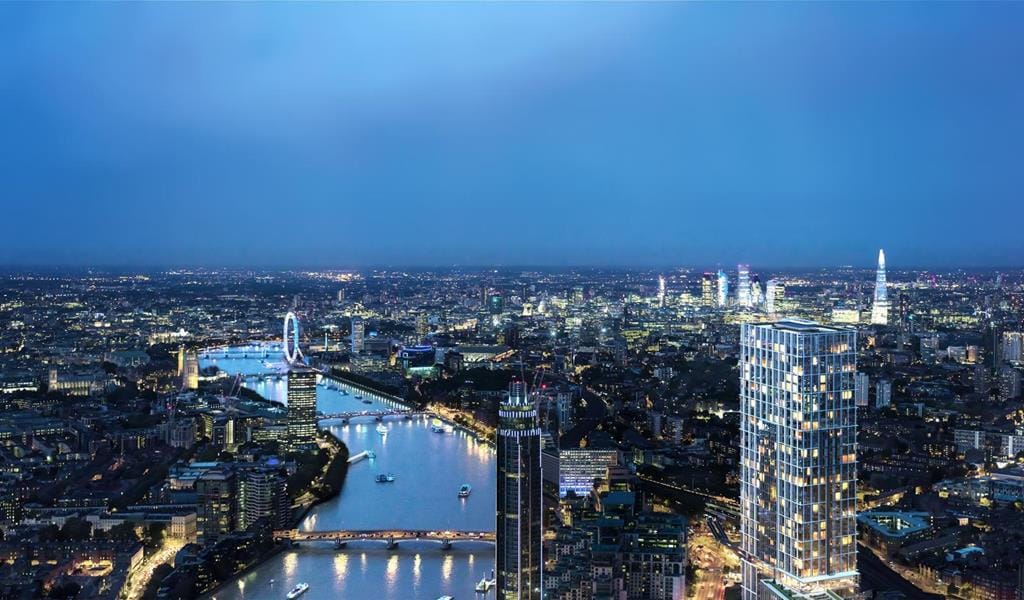
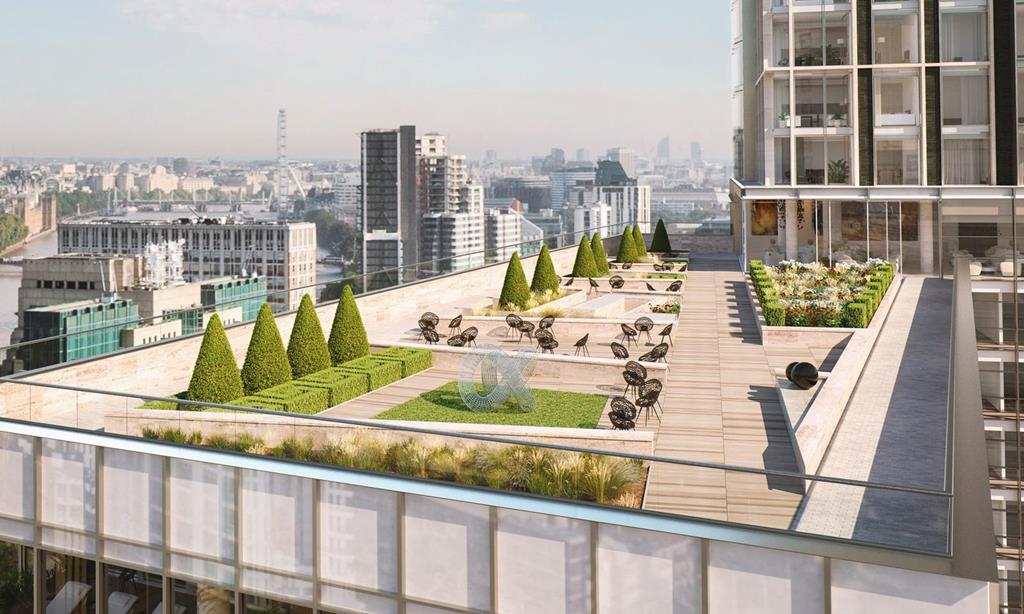
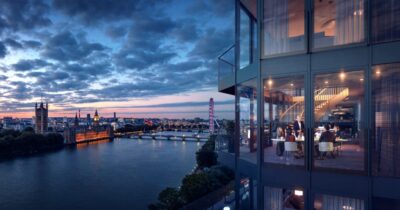
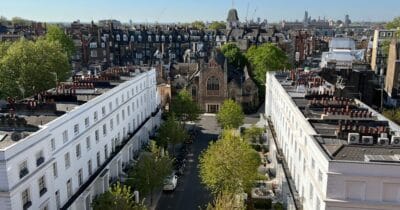
For centuries, London has attracted royalty, aristocrats, and business magnates alike. Today, the areas of Mayfair, Knightsbridge, and Kensington Palace Gardens, often called “Billionaires’ Row”, feature grand mansions and historic estates. London offers something few other cities can match: a blend of history, culture, education, and financial stability. The homes are legacies.

Knight Frank says areas near Hyde Park are among the most expensive in the world, on par with Monaco. Luxury prices in Notting Hill and Hertfordshire show that proximity to green spaces and cultural sites boosts value.
Buyers range from Singaporean clients using private lenders to Middle Eastern families employing mortgage brokers and banks to secure flexible financing. For these investors, London provides strong public services, an innovative banking system, and access to private equity and financial centres.
Areas like Holland Park still have high asking prices. They blend stunning architecture with quiet streets and proximity to embassies. The ultra-rich gravitate here for security, discretion, and the ability to store wealth as reliably as precious metals. It’s a haven for luxury cars. Residents often switch between new Mercedes-Benz models, such as the E-Class and S-Class.
They usually choose silver metallic or black models. These cars are bought from top dealerships that provide high-end service. Analysts often warn about tax burdens. Still, London draws buyers who value its cosmopolitan vibe over efficiency alone.
3: New Icon: Dubai
In the last ten years, many new stars have entered the luxury property scene. These are cities where lifestyle and innovation blend. Dubai has transformed from a small Gulf trading port into a glamorous real-estate hub. Ultra-modern skyscrapers, artificial islands, and golden beaches draw billionaires from Europe, Asia, and the Middle East.
Areas like Palm Jumeirah and Emirates Hills are known for their futuristic villas and beachfront estates. Dubai isn’t just beautiful. The city has no income tax, excellent infrastructure, and warmly welcomes global investors. For many elite people, this is a safe, stylish place to live.

Dubai’s luxury property market has boomed. Billionaires are drawn to its tax-friendly laws and easy residency rules. The city’s top properties, especially along Palm Jumeirah and in Emirates Hills, offer resort-like amenities and apparent political stability.
Buyers appreciate its fast visa options, clear regulations, and its ability to transform real estate into a lifestyle and a source of cash. Many ultra-rich families park their luxury cars here. They see the emirate as a global garage. New vehicles can be stored year-round, without the bureaucratic hassles found in Europe.
4: Poland: Warsaw and Sopot for Strategic European Holdings
Warsaw and Sopot may not get much media attention, but they are popular among wealthy investors. These investors want to diversify their holdings across the EU. Their appeal comes from stable legal frameworks, rising urban demand, and a growing class of wealthy Poles. These individuals often work with boutique firms that understand international capital flows.
The ultra-rich view these cities as a safe bet. They’re less risky than emerging markets, cheaper than classic Western capitals, and set for long-term growth. Reports from sources such as GOBankingRates show that Poland’s luxury markets are more affordable than those in Western Europe. This attracts real estate investors and family offices looking for steady returns.
5: Hamptons, Aspen, and Alpine Ski Resorts: Seasonal Wealth Preservation
Seasonal retreats are key to billionaire portfolios. They strengthen family identity and provide continuity across generations. The Hamptons, Aspen, Verbier, and other elite ski resorts are popular. They attract Americans and Europeans seeking privacy in wealthy communities. They can switch between homes based on the weather and their social calendars. Many people find that these retreats provide a space to step away from corporate life or retire altogether. They also allow real estate to be used later or passed on through trusts.
6: Monaco and the Riviera: Where Liquidity Meets Lifestyle
Monaco, on the Mediterranean coast, remains a playground for billionaires. Super prime property purchases focus less on rental yield and more on sovereignty, privacy, and tax optimisation. Many buyers own several homes just a few kilometres apart. They use these homes to host diplomats, business partners, or family friends visiting Europe. High-end dealerships serve collectors who switch between Mercedes, Ferraris, and custom cars in unique colours.
Why the Super-Rich Choose These Locations
When we talk about where wealthy people buy homes, we’re really talking about how they manage their assets. For ultra-high-net-worth individuals (UHNWIs), international real estate is more than just a luxury. It’s part of a larger financial strategy that includes stocks, bonds, gold, and private equity.
Wealthy homeowners want to live in places with reliable governments, safe streets, and strong property rights. Easy travel is essential, so homes near major flight hubs, like Dubai or Miami, are in high demand. Real estate is also a wise investment strategy. Owning property across countries helps billionaires protect against inflation, currency shifts, or political risk.
High-net-worth individuals see real estate as a stable pillar in diversified portfolios. Alongside liquid assets like stocks and bonds, prime homes are a mix of asset classes.
In reports such as the Knight Frank Prime International Residential Index, luxury homes outperform many financial markets. Wealthy investors understand that property can offer both capital gains and generational wealth. Prime and super-prime properties in key economic hubs like London, Singapore, and New York are seen as safe as gold.
How do billionaires choose locations for homes?
Across these destinations, the acquisition patterns of the ultra-rich reflect a consistent philosophy. Real estate isn’t just shelter; it’s a stabilising tool. It enhances portfolios that include stocks, venture capital, precious metals, and offshore accounts, as long as governments keep creating favourable conditions, such as low inheritance taxes, lender-friendly valuations, and elite mobility programs.
The Tax Equation: Inheritance, Loopholes, and Offshore Planning
Every family eventually faces the question of inheritance. High-net-worth individuals use complex corporate structures and offshore locations. They do this to protect their wealth and navigate tax systems legally and efficiently.
Some people use asset-leveraged loans or the “buy, borrow, die” strategy. This means borrowing against the increased value of assets, such as property, rather than selling them. It helps avoid capital gains tax. Some people use agricultural reliefs and agricultural property relief by investing in farmland. This can lower estate valuation under UK tax thresholds.
DDRE Global often points out that financial centres such as Monaco, Jersey, and Singapore help wealthy individuals manage their residence, citizenship, and inheritance effectively. This can be done without resorting to tax avoidance.
Behind every billionaire’s mansion is a team of experts: banks, mortgage brokers, interior designers, and tax consultants. Firms focus on equity release mortgages. They help clients access their assets while keeping ownership. Many people still prefer high LTV (loan-to-value) ratios and interest-only loans. They like having cash on hand rather than owning property outright.
For clients near Hyde Park or Kensington Gardens, advisers often team up with private equity partners or lenders. They help fund acquisitions worth millions. These deals are sometimes completed faster than the average person can secure a car loan from a dealership.
Iconic Properties of the Elite – World’s Most Expensive Houses
For a sense of scale, these are the world’s most famous luxury residences, and their buyers. In this inflationary world, real estate acts as a physical reminder of wealth’s endurance. But it’s also deeply cultural. In the age of Selling Sunset and Buying London on Netflix, homes have become part of entertainment and aspiration.
Even icons like Jeremy Clarkson and James Dyson have turned rural estates into profitable ventures. Clarkson’s Farm, close to Riverford Organic, has noted agricultural property relief. Meanwhile, Dyson has invested heavily in farmland and innovation hubs in Wiltshire.
- Buckingham Palace (London, UK): Estimated Value: $4.9 billion. Home of the British monarch, featuring 775 rooms, including 78 bathrooms and 92 offices.
- Antilia (Mumbai, India): Valued at $2 billion and owned by billionaire Mukesh Ambani. 27-storey skyscraper residence with three helipads, a ballroom, and a private movie theatre.
- Villa Leopolda (French Riviera, France): Valued at $750 million, and once owned by King Leopold II of Belgium. Features sprawling gardens, 11 bedrooms, and lavish terraces overlooking the Mediterranean.
- The One (Bel-Air, Los Angeles, USA): Price tag of $350 million. Mega-mansion with 105,000 sq. ft., 21 bedrooms, a nightclub, and an IMAX theatre.
- Les Palais Bulles (Théoule-sur-Mer, France): Owned by fashion designer Pierre Cardin, and worth $335 million. Unique “Bubble Palace” design with spherical rooms and a panoramic sea view.
Where UK Millionaires Are Buying in 2025: Key Trends & Data
London Is Still the Core: London remains the epicentre of this trend: the capital now has 349,068 homes worth at least £1 million. That means one in every 11 homes in London is valued at £1 million or more. A “return-to-office” trend partly drives the rebound: as people return to city working, demand for prime urban real estate is rising again.
Outside London: Interestingly, while London is booming, the rest of Great Britain saw a slight decline (–1%) in the number of £1 million-plus homes in the same period. But over a longer horizon (five years), growth outside London has been robust, at about +58%, compared to +16% in London during the same period. Some regions are seeing notable increases: for instance, the West Midlands added 918 new million-pound homes in the last year.
Where do wealthy people invest their money?
Wealthy individuals typically build their portfolios around diversification, stability, and long-term growth, spreading their money across a mix of public markets, private investments, real estate, business ownership, and alternative assets. Public markets such as global stocks, bonds, and ETFs form the liquid foundation of their wealth, providing steady appreciation and flexibility.
Beyond that, the rich increasingly lean on private markets like private equity, venture capital, hedge funds, and private credit, which offer higher potential returns but require substantial capital and longer time horizons. Real estate remains a central pillar: from luxury primary homes to rental portfolios, commercial buildings, and international properties, wealthy investors use property to generate income, hedge against inflation, and diversify their geographic risk.
Many also own or invest in private businesses, where returns can far exceed those of traditional markets and where a large portion of generational wealth is often created. To further protect and amplify their wealth, wealthy individuals allocate capital to alternative assets such as gold, art, rare collectables, fine wine, and increasingly cryptocurrencies, though usually in modest proportions. A defining feature of high-net-worth investing is strategic tax planning, using tools such as trusts, pensions, ISAs, family investment companies, and, in some cases, international structures to preserve wealth efficiently.
More About Luxury Property
From Hyde Park to Dubai Marina and Antilia to Villa La Leopolda, these homes show how money flows. They reveal how families create wealth over generations and how nations vie for global investment. We are Spot Blue International, and we hope this article has helped you understand where rich people buy real estate.
As specialists, our agents are standing by to answer any calls you may have about owning international property. You can also see our portfolio of apartments and villas here, and use the contact details to find out more or arrange viewings. The following articles will also be of interest.
Expensive Markets: Several global cities rank among the world’s most expensive housing markets, with property prices reaching unprecedented levels. Home values in these markets are affected by limited supply, high demand, and economic factors that drive up costs.
Expensive Houses: Think super large swimming pools, garages for four cars upwards, tennis courts, lakes, home theatres, and much more. Situated in cities across the world, these expensive homes have sold on real estate markets for eye-watering prices. The owners are sometimes discreet, and at other times, heavily in the public eye.