 Natalie
 Where the Aegean Sea meets the Mediterranean, the Muğla region of Turkey is the most popular destination for foreign tourists and house hunters. Boasting beautiful beaches, a rich history and stunning sunsets, most people instantly fall in love with the Muğla province and become die-hard fans, returning year after year.
Travel publications constantly rave about the coastal towns and villages, while house hunters buy property in a beloved resort either for holidays or to live here permanently. As a favourite destination of British people, it attracts Europeans eager to know what all the hype is about.
About the Muğla Region of Turkey
Understanding Muğla: Geography
The province stretches along Turkey’s southwestern coastline, encompassing a diverse landscape of rugged peninsulas, hidden coves, pine forests, and mountain ranges. This geographical diversity has shaped the history and culture for millennia, creating distinct micro-regions with their character and charm. The province covers approximately 13,338 square kilometres and is home to famous coastal resorts and quieter, more traditional settlements.
Historical Importance
Evidence of human settlement in Muğla dates to prehistoric times, with the Minoan and Mycenaean civilisations. The Caria region, which includes modern Muğla, was important during the classical antiquity Greek period. Caria was home to various independent city-states, with strong ties to Greek culture. Halicarnassus was one of the Seven Wonders of the Ancient World.
After the death of Alexander the Great in 323 BCE, Muğla joined the Seleucid Empire and later the Ptolemaic Kingdom of Egypt. Following the conquest by the Romans, Muğla fell under the Roman Asian Province. With the fall of the Western Roman Empire, the Byzantine Empire took over. By the 7th century, the Byzantine Empire faced invasions by the Arabs and Seljuks. Although Muğla remained a Byzantine stronghold for a time, by the 11th century, Turkish and Muslim powers were growing. During the Seljuk period, Muğla joined the Sultanate of Rum.
In the 13th century, the Seljuks made significant cultural and architectural contributions, constructing mosques, caravanserais, and other public buildings that blend Persian, Arab, and Turkish influences. Muğla joined the Ottoman Empire in the 14th century. Ottoman influence can still be seen in the architecture, especially in Bodrum (Halicarnassus), Marmaris, and Fethiye, which became important centres for the empire’s naval power. Following the collapse of the Ottoman Empire after World War I, Muğla became part of the newly established Republic of Turkey in 1923.
Climate
Muğla enjoys a classic Mediterranean climate with hot, dry summers and mild, wet winters. From June to September, the peak tourist season sees temperatures between 30-35°C (86-95°F). The shoulder seasons of April-May and September-October offer ideal conditions for more tranquil experiences with fewer crowds. During these months, temperatures are comfortable (20-25°C/68-77°F), accommodation prices drop significantly, and you’ll have more space to explore historical ruins and natural attractions. Winter visitors will find many coastal tourist businesses closed, but local life continues.
Best-Preserved Ancient Cities and Sites for History Enthusiasts
Xanthos and Letoon (Fethiye)
Xanthos, near Kınık, is one of Turkey’s most important historical sites. Among the highlights of Xanthos are the Nereid Monument, a monumental tomb famous for intricate reliefs and sculptures, and the Xanthos Greek theatre, offering panoramic views. The Apollo Temple, a leading religious site, also reminds visitors of the pagan past. Scattered around the site are numerous Lycian tombs, reflecting the burial traditions. When defeat by the Persians became imminent, the inhabitants burned their city and committed mass suicide rather than be captured.
Close to Xanthos, the Letoon sanctuary was the Lycian religious centre dedicated to three deities: Leto, Apollo, and Artemis. Leto Temple displays the beautiful history of well-preserved structures and a sacred spring associated with the gods. Other remnants include a theatre and several ruins scattered across a lush, fertile valley. Xanthos and Letoon are UNESCO World Heritage Sites and provide a remarkable insight into Lycian culture and religion.
Tlos (Near Fethiye)
Tlos, near Yakaköy, dates from the Hittite period around 2000 BCE. As an important centre throughout Lycian and Roman times, one remarkable landmark is the Royal Tomb, which stands proudly on the hills overlooking the Xanthos valley. The theatre offers beautiful views and sits near the Acropolis, citadel, and Temple of Zeus. The ruins of Roman baths and a marketplace (Agora) further enhance the historical importance.
Iasos (Bodrum)
Iasos, near Güllük, was an ancient Carian city and trade centre due to its strategic location along the Aegean coast. The remains are spread out and feature the well-preserved theatre, which offers excellent acoustics. The city walls are still visible in parts, and the Athena temple, with classical Greek architecture, reflects ancient Greek culture. The harbour is another highlight, reflecting the city’s maritime past.
Kayakoy Ghost Village (Fethiye)
Kayakoy is a poignant ghost village, once a thriving Greek settlement known as Levissi. The Greek inhabitants were forced to leave after the population exchange between Greece and Turkey in the 1920s. Today, stone houses stand derelict. Notable sites include several ruined churches, such as the St. Nicholas Church, and the village centre, which once featured a busy market and community spaces. Kayaköy’s abandoned streets and houses evoke beautiful atmospheres, and visitors enjoy scenic walking trails that lead through the village and surrounding areas, offering stunning views.
Euromos (Milas)
Sitting near Milas, Euromos, an ancient Carian city, famous for the Temple of Zeus provides insight into the architectural prowess. Euromos has an ancient theatre, and although it is less intact than the temple, it still offers insight into public life. There are remnants of city walls and gates, Roman baths and a marketplace and while tourists often overlook Euromos, it is a hidden gem for historical ruins.
Bodrum Castle
Bodrum Castle, called Castle of St. Peter, was built by the Knights Hospitaller in the 15th century. The castle was constructed using stones from the Mausoleum of Halicarnassus. Today, the castle houses the Museum of Underwater Archaeology, which displays relics recovered from underwater archaeological sites in the Aegean Sea. Explore various towers, including the French Tower and the Tower of the Knights. The castle is a remarkable example of medieval military architecture.
Dalyan Lycian Rock Tombs (Dalyan)
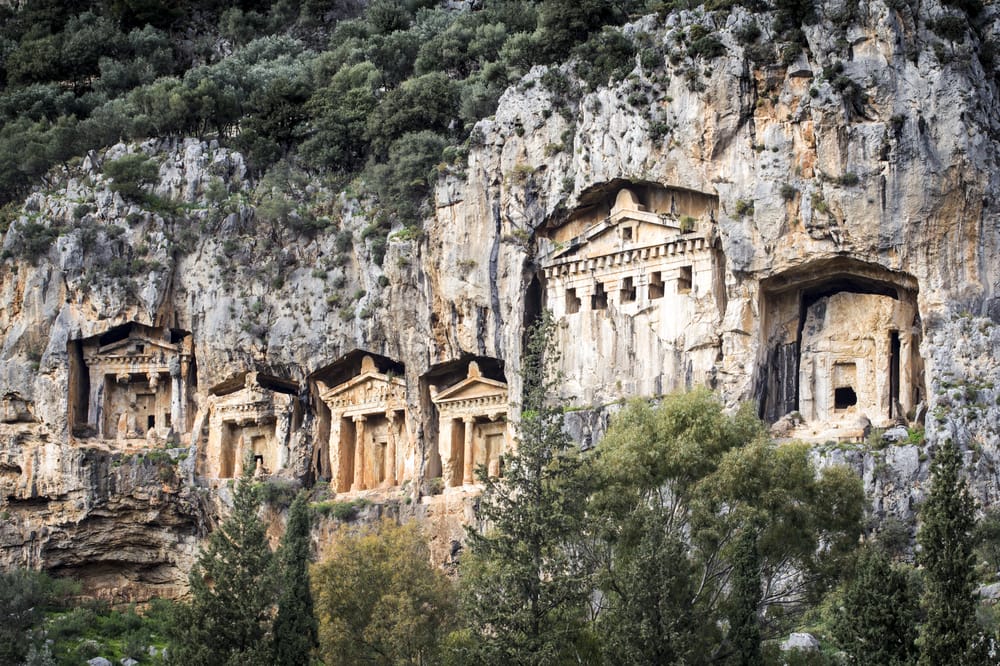
The Lycian Rock Tombs in Dalyan were burial places for their elite. The King’s Tomb, with the elaborately decorated façade, is often photographed by visitors. Many tourists take boat trips along the river to view these tombs. Nearby is ancient Kaunos, which has a theatre, city walls, and a bath complex.
Amyntas Rock Tomb (Fethiye)
Carved into the cliffs above the city, these tombs belonged to Lycian kings. The tombs are renowned for their impressive facades, which are designed in a Greek temple style with columns and intricate carvings. From the tombs, visitors are treated to stunning views over the city. The Amyntas Rock Tombs are easily accessible and provide awe-inspiring glimpses into burial traditions.
Famous Coastal Towns
Bodrum Peninsula: Luxury and History
Bodrum, once home to ancient Halicarnassus, is an internationally recognised destination for luxury and often attracts Turkish and international celebrities. The imposing Castle of St. Peter dominates the harbour, housing the fascinating Museum of Underwater Archaeology, where artifacts from shipwrecks tell tales of maritime trade and naval battles. Just outside town, the scant remains of the Mausoleum at Halicarnassus receive a steady trickle of visitors.
The marina fills with impressive yachts during summer, while exclusive resorts like Mandarin Oriental and Edition Bodrum offer world-class accommodations along pristine beaches. The peninsula’s many bays—Gumbet, Bitez, Ortakent, Yahşi, Turgutreis—each offer distinct atmospheres, from party-focused beaches to family-friendly coves. Do try fresh seafood meze while watching the sunset over the Aegean.

Fethiye Region: Where Mountains Meet the Sea
Fethiye offers dramatic landscapes, where the towering Taurus Mountains plunge directly into the Mediterranean Sea, and the town wraps around a natural harbour, with a pleasant promenade lined with restaurants and tea gardens. Above the city, tombs date from the 4th century BCE, accessible via a short hike offering panoramic views over the bay.
Just 15 kilometres from the town centre lies Oludeniz (Dead Sea), home to the famous Blue Lagoon—a sheltered cove of impossibly blue water connected to a perfect crescent beach. While the main beach gets crowded in summer, the lagoon (accessible for a small fee) offers calmer waters and more space.
Oludeniz is a world-renowned paragliding destination, with tandem flights launching from Babadag Mountain (1,969m) providing unparalleled aerial views, and affordable hotel options. Calis’s beach is popular for its beautiful sunsets and stunning beaches, and many British people buy holiday homes there. There is a popular boat taxi across to the main town.

Marmaris and Icmeler
Nestled within a magnificent natural harbour surrounded by pine-covered mountains, Marmaris has evolved from a sleepy fishing village to a major city. The sheltered bay provides ideal sailing and water sports conditions, while the long promenade offers endless opportunities for strolling, dining, and people-watching. The old town, centred around the restored Marmaris Castle, retains some Ottoman charm with narrow streets and traditional architecture. Just 8 kilometres from Marmaris, Icmeler is more relaxed with the crescent-shaped beach and mountain backdrop.
The resort has been thoughtfully developed with broad pedestrian areas, well-maintained gardens, and a canal system that has earned it the nickname “Turkey’s Little Venice.” The beautiful city serves as an excellent base for day trips, including boat excursions to Dalyan to see the famous Lycian tombs and Iztuzu Beach (a protected nesting ground for loggerhead turtles), or visits to ancient Knidos on the Datca Peninsula. For nature lovers, the nearby Selimiye and Bozburun peninsulas portray traditional coastal life with their small fishing villages and secluded bays accessible only by boat.
Datca Peninsula: Untouched Mediterranean Beauty
At the meeting point of Turkey’s Aegean and Mediterranean seas, Datça’s relative isolation—a winding two-hour drive from Marmaris—has protected it from overdevelopment, preserving the natural beauty and traditional character. Datca offers relaxed atmospheres with the small harbour, craft shops, and excellent seafood restaurants serving the day’s catch.
Beaches like Kumluk offer amenities, while those seeking solitude find numerous secluded coves accessible by car or boat along the northern and southern coasts. Palamutbükü and Hayıtbükü on the south shore feature shallow, calm waters perfect for families, fronted by simple restaurants serving farm-to-table meals under the shade of plane trees.
At the tip lies Knidos city ruins, a Dorian cultural and commercial centre. The archaeological site features a double harbour, a temple to Aphrodite (which once housed a famous nude statue of the goddess by Praxiteles), and a theatre overlooking the brilliant blue sea.
Akyaka and the Azmak River: Eco-Tourism Haven
Tucked into the eastern corner of the Gulf of Gökova, Akyaka has developed as an eco-conscious alternative. The town’s distinctive architecture—traditional Ottoman wooden houses with elaborate balconies and details, and strict building height restrictions has created a visually appealing coastal settlement.
The heart of Akyaka, the Azmak River, a short but obvious freshwater stream, is fed by underground springs that maintain a constant cool temperature year-round. Akyaka’s beach sits where the river meets the sea, creating interesting swimming conditions where cool freshwater mixes with the warmer salt water. The consistent winds have made Akyaka a centre for kitesurfing, with several schools offering lessons for beginners.
For nature lovers, the nearby Cinar Beach is part of a protected wetland area important for bird migration. At the same time, the mountain roads behind Akyaka lead to traditional villages like Kuyucak, famous for lavender fields that bloom spectacularly in June and July.
Dalyan and Kaunos: Where History Meets Nature
The small town of Dalyan, between Lake Köyceğiz and the Mediterranean Sea, offers historical significance and natural beauty: the town’s most recognisable feature, the tombs carved into cliffs, date from the 4th century BCE. The river is part of a protected delta ecosystem, with several bird species and endangered loggerhead turtles (Caretta caretta). Boat trips reveal an ever-changing landscape of reed beds, islands, and finally the famous Iztuzu Beach—a 5.5-kilometer stretch of golden sand that separates the freshwater delta from the Mediterranean.
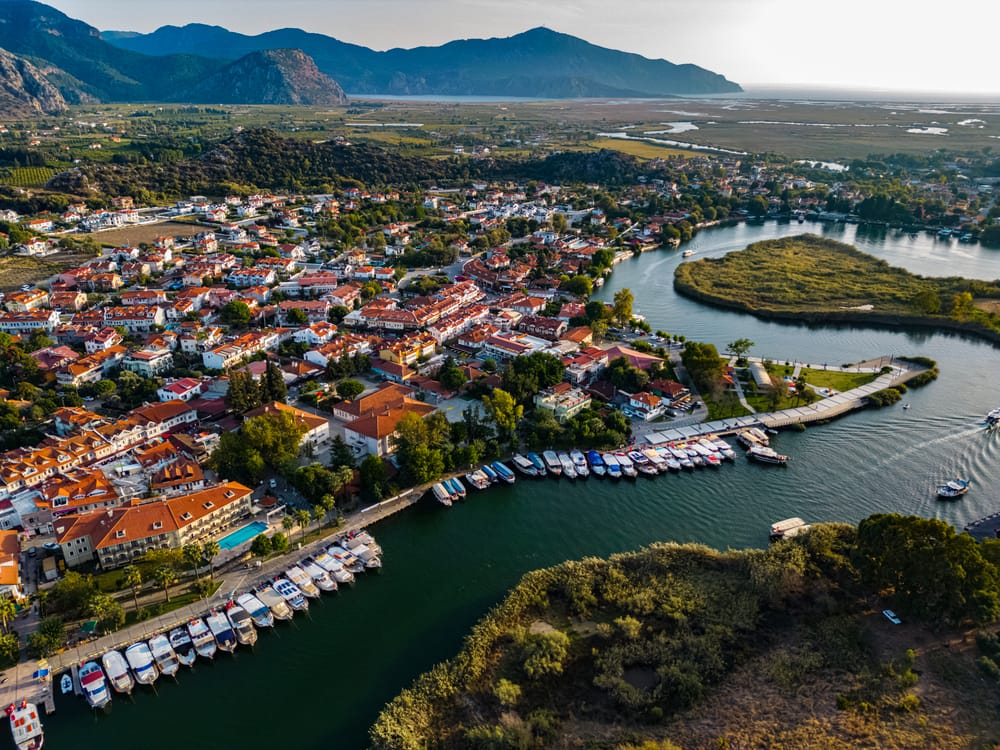
Restricted access protects turtle nesting sites, with specific areas closed off during breeding seasons from May to October. On the opposite bank from the rock tombs lies the Kaunos archaeological site with a theatre, an agora, and a Byzantine Basilica. Near Dalyan, the mud baths of Sultaniye contain therapeutic minerals for skin conditions and rheumatism.
Lycian Way and Hiking Opportunities
The eastern portion contains sections of Turkey’s first long-distance hiking trail, the Lycian Way. This 540-kilometer route covers the Lycian civilisation, connecting numerous historical sites while passing through stunning coastal and mountain landscapes. The trail starting in Antalya but passing through Muğla to eventually finish in Fethiye, includes winding paths along cliff tops hundreds of meters above the Mediterranean.
Beyond the Lycian trek, Muğla offers numerous other hiking opportunities. The mountains behind Akyaka contain trails through pine forests to seasonal waterfalls and viewpoints overlooking the Gulf of Gökova. In Datca, paths pass through olive groves and almond orchards. The Bozburun Peninsula features trails that follow stone-paved paths between traditional villages where life continues much as it has for generations. The Akdağ range rises to over 3,000 meters for serious mountaineers, offering challenging terrain to hike from sea to alpine environments in a single day.
Where to go for Golden Sands
Naturally, being a coastal destination, there are many beach resorts that in summer become a hive of activity for the golden sands, as well as boat rides, and water sports. What better place to experience the sun, sea, and sand than the Aegean Mediterranean cusp? Oludeniz is iconic and renowned for its clear turquoise waters and striking lagoon. The calm, shallow waters make it ideal for swimming, while the nearby Belcekız Beach is perfect for paragliding, attracting adventure seekers.
Just a short drive from Fethiye, Çalış Beach offers a long stretch of pebbly shore with calm waters and a relaxed atmosphere. Known for its spectacular sunsets, providing a perfect view of the sun setting, it’s popular for water sports, including kite surfing, and the gentle breeze makes it a comfortable destination even on hot days.
Hisaronu Bay, near Marmaris, is a quieter alternative. This charming bay features calm, shallow waters, making it an excellent destination for swimming and snorkelling. The surrounding area is dotted with boutique hotels and restaurants, offering a more tranquil and intimate experience than the bustling resort towns nearby. Near Dalyan, İztuzu is often called “Turtle Beach” because it is a nesting ground for the endangered loggerhead sea turtles.
Water-Based Adventures
The Turkish Riviera and blue cruise voyages aboard traditional wooden gulets explore coves and archaeological sites accessible only from the sea. These cruises leave from Bodrum, Marmaris, or Fethiye on varied 3 14- day itineraries. All resorts are also top scuba diving centres, where tourists can complete one-day dives or go further and obtain their PADI certificate.
For a gentler experience, kayaking on the Köyceğiz Lake or along protected shorelines of the Dalyan Delta provides opportunities to observe wildlife while enjoying peaceful paddling through beautiful scenery. One impressive natural wonder is Saklikent Gorge, the second-longest canyon in Europe, 18 kilometres long, with walls that rise to 300 meters. Located about 50 kilometres from Fethiye, the Eşen River formed the gorge by cutting through the Akdağ mountains over thousands of years.
Which airports should you use for the Muğla Region?
Two international airports serve Muğla: Dalaman Airport for Fethiye, Göcek, and Dalyan, and Milas-Bodrum International Airport, which serves Bodrum, Altinkum, and Kusadasi in the neighbouring Aydin province. Both airports receive direct flights from major European cities during summer, while connecting through Istanbul is necessary during the off-season.
Buying Property in Muğla
As mentioned, Muğla is a popular place to buy property for investment, a holiday home, or somewhere to retire. Most of the reason is the coastal location, where towns and villages have a cosmopolitan atmosphere punctuated by English speakers and foreign influences. If you want to learn more about becoming a homeowner in Turkey, see our portfolio of homes for sale here. Just use the contact details to learn more or arrange a viewing. Also, contact our agents if you want to know more about the Muğla region of Turkey.